
On Friday 26th July the Edinburgh Shoreline Project accompanied academics from the University of Edinburgh for their first meadow scoping exercise. As part of Edinburgh Shoreline: The Wild Line the University of Edinburgh and City of Edinburgh Council will be planting 8 new perennial coastal wildflower meadows to connect up existing flower-rich areas from Cramond to Granton. This will create a ‘pollinator corridor’ in the north of the city.
For our first outing, we visited the 8 proposed sites to check current species diversity and sense check the locations. We would not wish to disturb any important or rare plant species when sowing our meadows! We are pleased to report that none were found – just the regulars, mainly grasses, with flowers like clover and yarrow in small quantities.
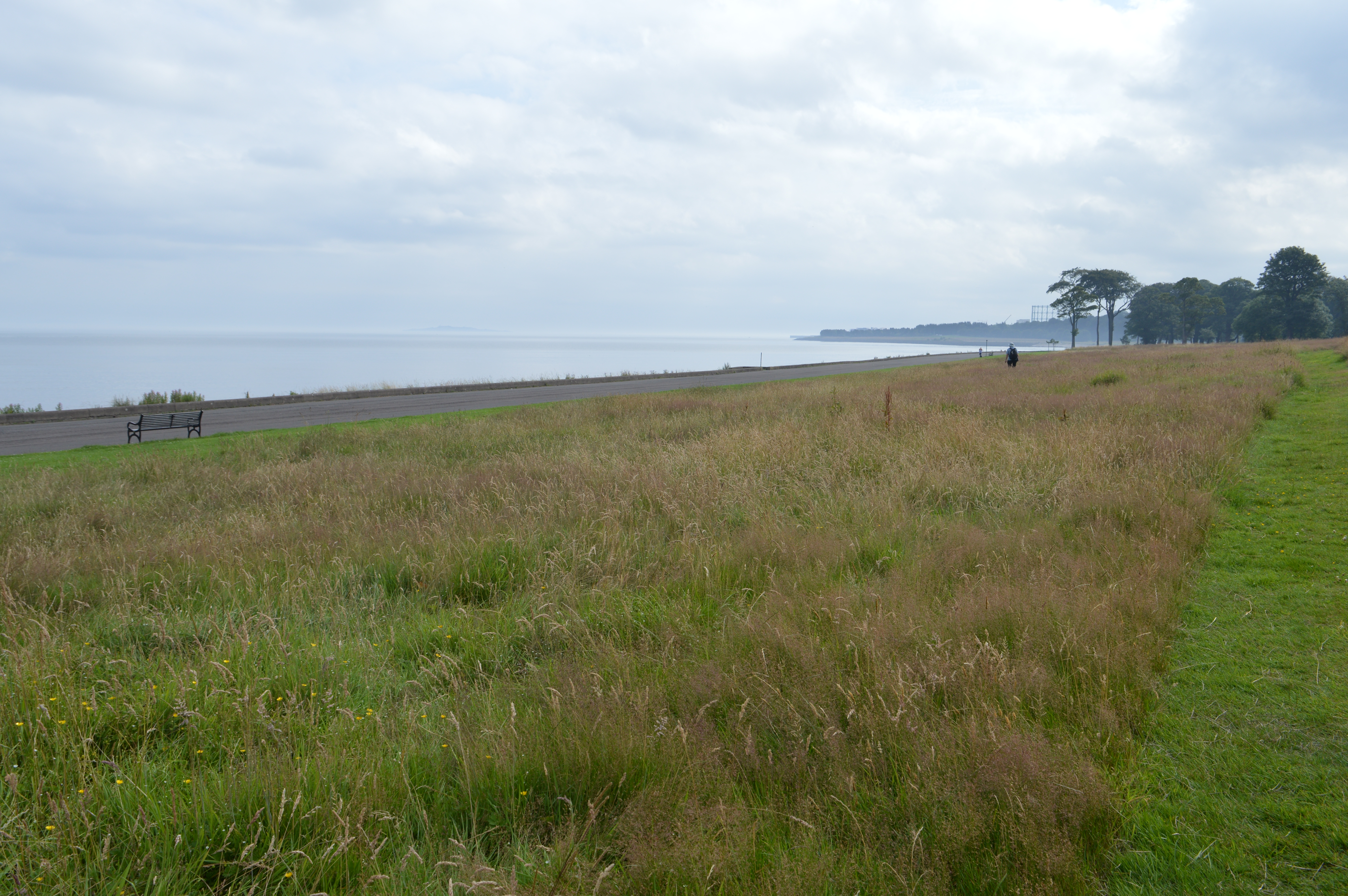

In the autumn the City of Edinburgh Council will begin de-turfing, and in early spring we will sow our coastal seed mix. We always use locally collected seed from Scotia Seeds, and our mix will include species that would be found in natural coastal meadows such as sea mayweed, sea campion, kidney vetch thrift and bird’s foot trefoil. Whilst on our walk the botanists amongst the group came up with some suggestions of other species that could be appropriate such as wild carrot, wild parsnip and self-heal, and so we intend to add these too, either as seed or plug plants.
Here are a few of the 30+ species we will use:


The meadows will be perennial, meaning and they will be long-lasting and will improve over time. As the plants establish and self-seed, we will not need to re-sow the meadows (additional cost and work) year after year. We are sure they will will look fantastic over summer, will provide a food-source for pollinators in spring and summer (with some plants being specific to species such as the common blue butterfly) and birds in winter (seeds), and create the feeling of a more naturalised coastline for the city.